Scantron
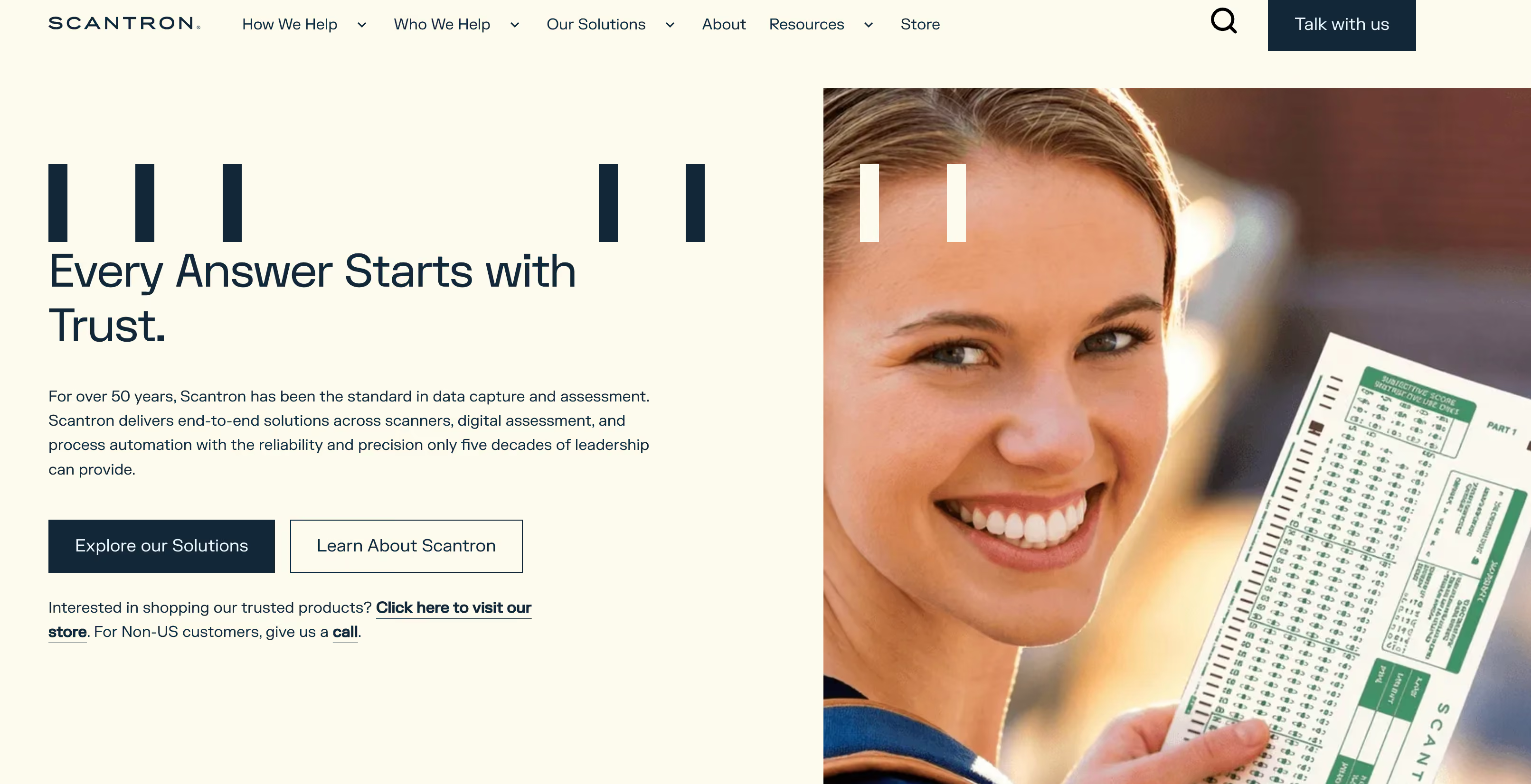
How a 50-year legacy brand made scanners sexy again without losing the nostalgia that built it.
A household name trapped in an uneditable website
Everyone over 30 knows Scantron. The forms, the scanners, the machine-gun sound when the whole class got it wrong. Founded in 1972, the brand is as close to generic trademark status as office supplies get: teachers say "Scantron" the way people say "Kleenex."
But the website told a different story. It was outdated, cold, and clunky. The plugins and styling sheets were so far gone that the people who originally built it were no longer around. Literally no one at the company could make an edit. For a brand serving education, government, corporate, and healthcare clients internationally, the front door was padlocked from the inside.
Worse, Scantron had evolved far beyond scanners and forms. They'd built a full digital ecosystem: automated testing, surveys, data collection, feedback processes. None of that was visible to anyone visiting the site.
Respecting what came before while building what comes next
When Tracy Harelson came on as a leader at Scantron, the brand guidelines for a rebrand were already done. The creative direction existed. What was missing was a partner who could translate that direction into a site that honoured the legacy without being trapped by it.
Hien's approach was conversational. No intake form, no requirements doc handed across a table. Just: talk to me, tell me what you think, what are you trying to show? That process surfaced what mattered: the nostalgia, the pride in people who'd been there 40 years, the desire to feel modern and fun without pretending to be a startup.
The team wanted to streamline (no one should sift through millions of pages for answers), personalize (education, corporate, healthcare, and government all needed to feel spoken to), and elevate (sleek and modern without abandoning warmth).
Collaboration with someone who knows what good looks like
Tracy brought a web development background to the project. Dreamweaver-era, sure, but the instincts were real: check every device, verify rendering, demand consistency and flow. She wasn't a passive stakeholder signing off on mockups. She was in the details, giving edits, pressure-testing quality.
That dynamic worked because Huck Finch builds for collaboration, not compliance. The process wasn't task-taking and outputs. It was "I kind of feel like we want to do this, what do you think?" and "I have this idea but you might execute it better." Tracy felt like she was developing alongside the team, even though they were doing the heavy lifting.
Hien and team took every brainstorm, every half-formed idea, and made order of them. That's the skill that unlocks paralysis: when a legacy brand has too much content, too many stakeholders, and no idea where to start, the partner who can visualize what the client means (not just what they said) is the one who ships.
When people are looking for answers, they're not trying to sift through millions of pages. We wanted to value where we came from, but give it a sleek, more modern, more fun vibe, keeping that nostalgia. They knocked it out of the park.
A site that finally shows what Scantron actually is
The new site launched and immediately communicated what a decade of digital evolution hadn't: Scantron is not just scanners and forms. It's a full-service assessment and data platform serving thousands of institutions across four sectors and multiple countries.
The streamlining worked. The personalization worked. And critically, the vibe worked: modern and fun without pretending the last 50 years didn't happen. Tracy's summary: "Scantron is cool. Scanners can be sexy."
Phase one shipped, iteration never stops
The first site launched about four months ago, and the team is already iterating. As traffic data comes in and trends emerge, Huck Finch is right there: what do you want next, how can we elevate this, how can we do more?
That's the test of a real partnership versus a project handoff. Scantron's team wants to keep building, and their partner is already asking what's next. For a brand that's been around since 1972 and plans to be around for another 50 years, that continuity matters more than any single launch.
Another one